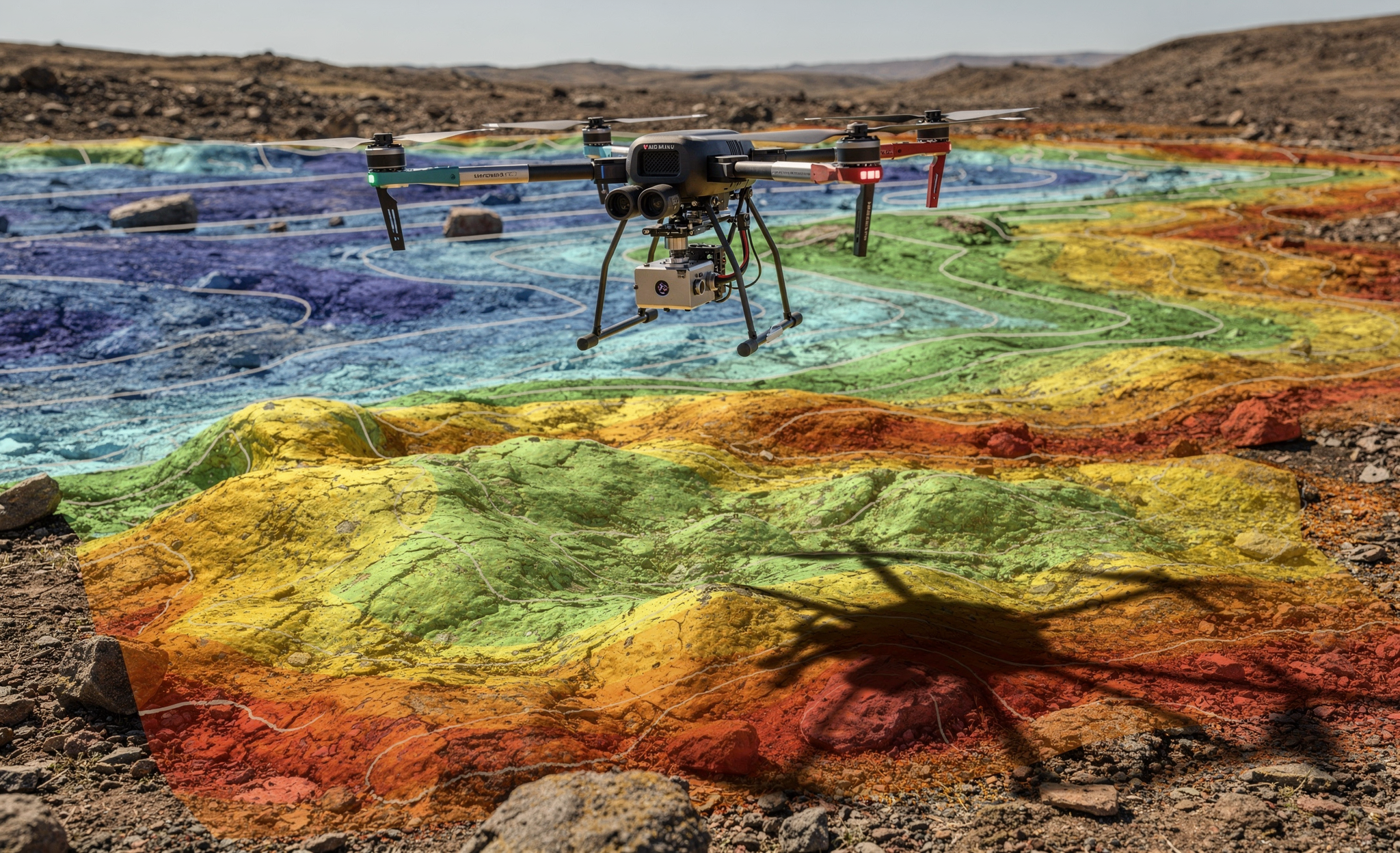
Magnetic ground mapping
The sensor can be mounted on a drone or vehicle to create high-resolution magnetic maps of the subsurface. This can be used in mining and mineral exploration but also for archaeological prospection and geophysical surveys.
Quantum Enhanced Metal Detection
QEMD pioneers quantum-enhanced metal detection technology, delivering sensitivity and precision far beyond the limits of conventional systems.
01 — The Problem
Traditional metal detection systems are limited by the technology they rely on. For near surface metal detection, active magnetometers are used, they have a depth reach of up to one meter. If UXOs or other metallic objects are buried deeper, they can only only be detected by bore hole detection. This process involves drilling holes into the ground in a grid pattern with a spacing of 1.5m. Each hole is then scanned with a passive flux gate magnetometer. This process is extremely time consuming and expensive, and demands for a solution.
02 — Our Solution
We harness nitrogen-vacancy (NV) centers in diamond to build an active magnetometer. Our platform achieves sensitivity levels that are physically impossible with classical sensors — detecting metallic objects from the surface with a depth reach of up to 30 meters. This makes bore hole detection obsolete, and allows for fast, non-invasive scanning of large areas with unprecedented precision. Since we can cut cost at the construction site, we can lower price for new housing and infrastructure projects. In addition to that, our high sensitivity allows us to distinguish between different types of metallic objects, which lets us classify detected objects and prioritize them for removal.
Use Case
Unexploded ordnance (UXO) buried deep underground poses an ongoing threat to construction sites, agricultural land, and populated areas worldwide. QEMD replaces the slow, invasive bore-hole grid process with a fast, non-invasive surface scan — cutting detection time and cost by orders of magnitude.
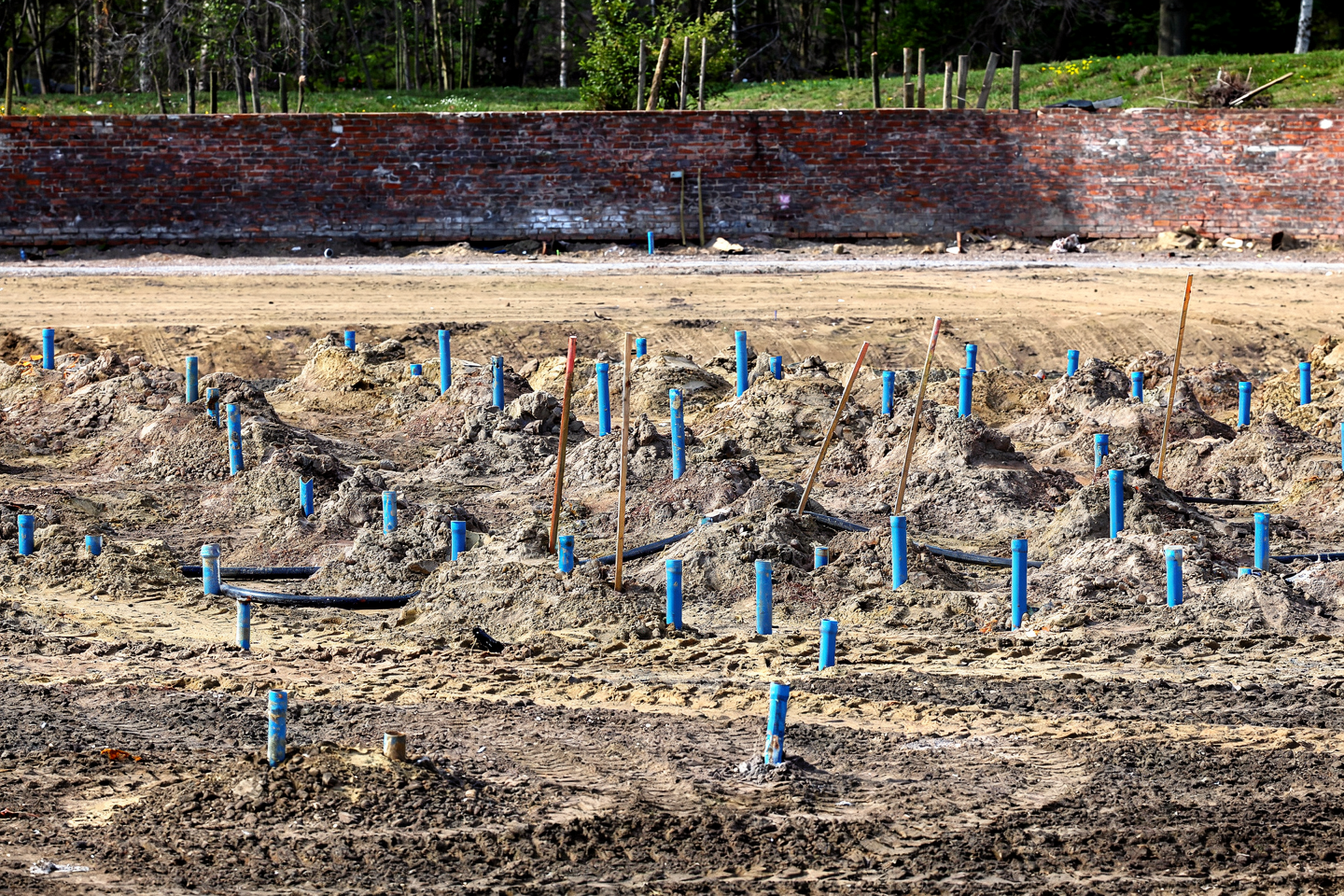
Holes are drilled in a dense grid (≈1.5 m spacing) across the entire area. Each hole is scanned individually with a passive fluxgate magnetometer — an extremely time-consuming and expensive process.
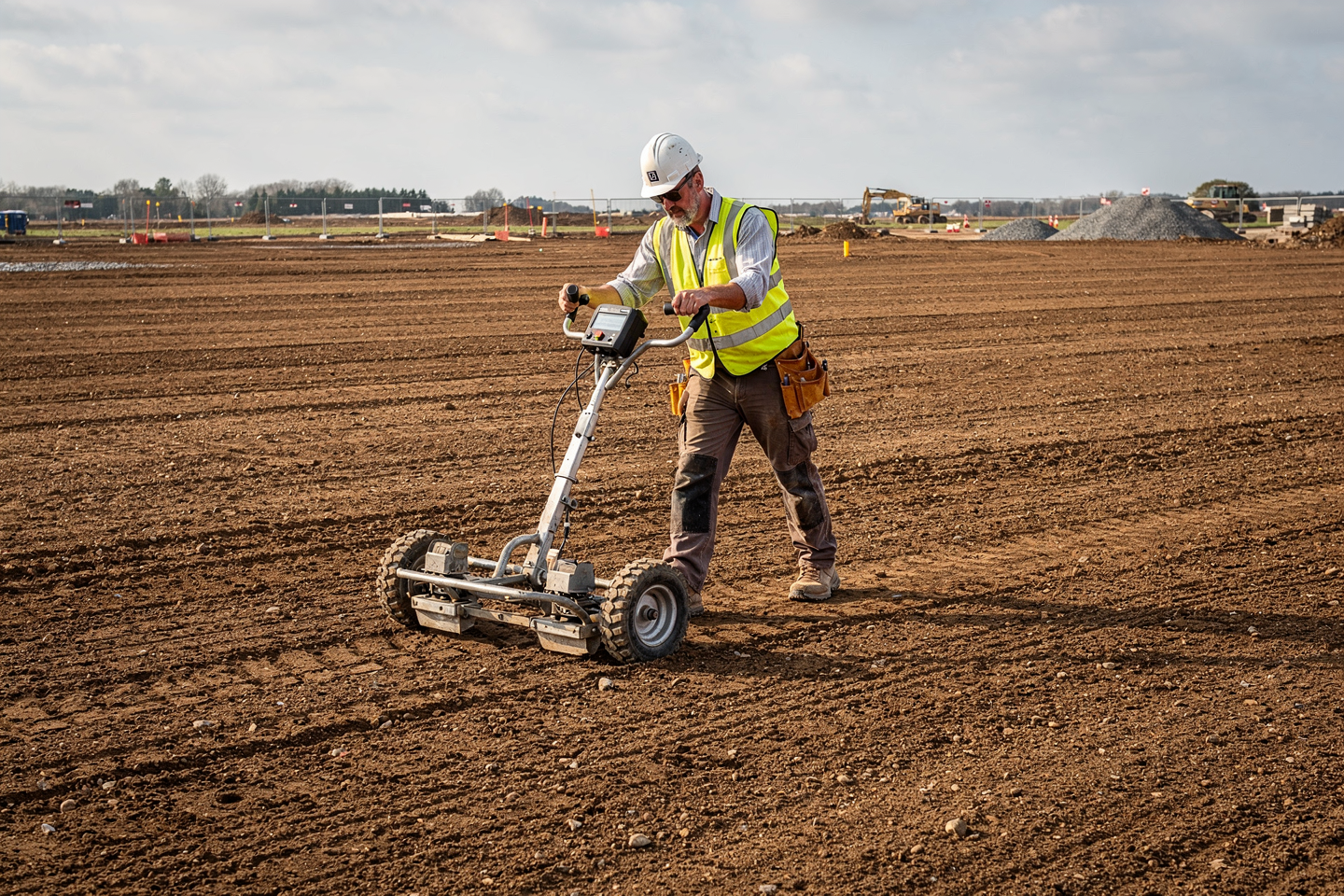
A single surface pass with the QEMD sensor covers the full area non-invasively, detecting metallic objects down to 15–30 m depth with 10 pT sensitivity and real-time classification of detected objects.
How It Works
The quantum sensising unit is used to scan the area of interest.
From the raw magnetic field data a precise magnetic map of the subsurface is reconstructed. This allows us to localize and classify detected objects.
The localised metallic objects can then be precisly cleared by the UXO clearance team.
Other Applications
The sensor can be mounted on a drone or vehicle to create high-resolution magnetic maps of the subsurface. This can be used in mining and mineral exploration but also for archaeological prospection and geophysical surveys.
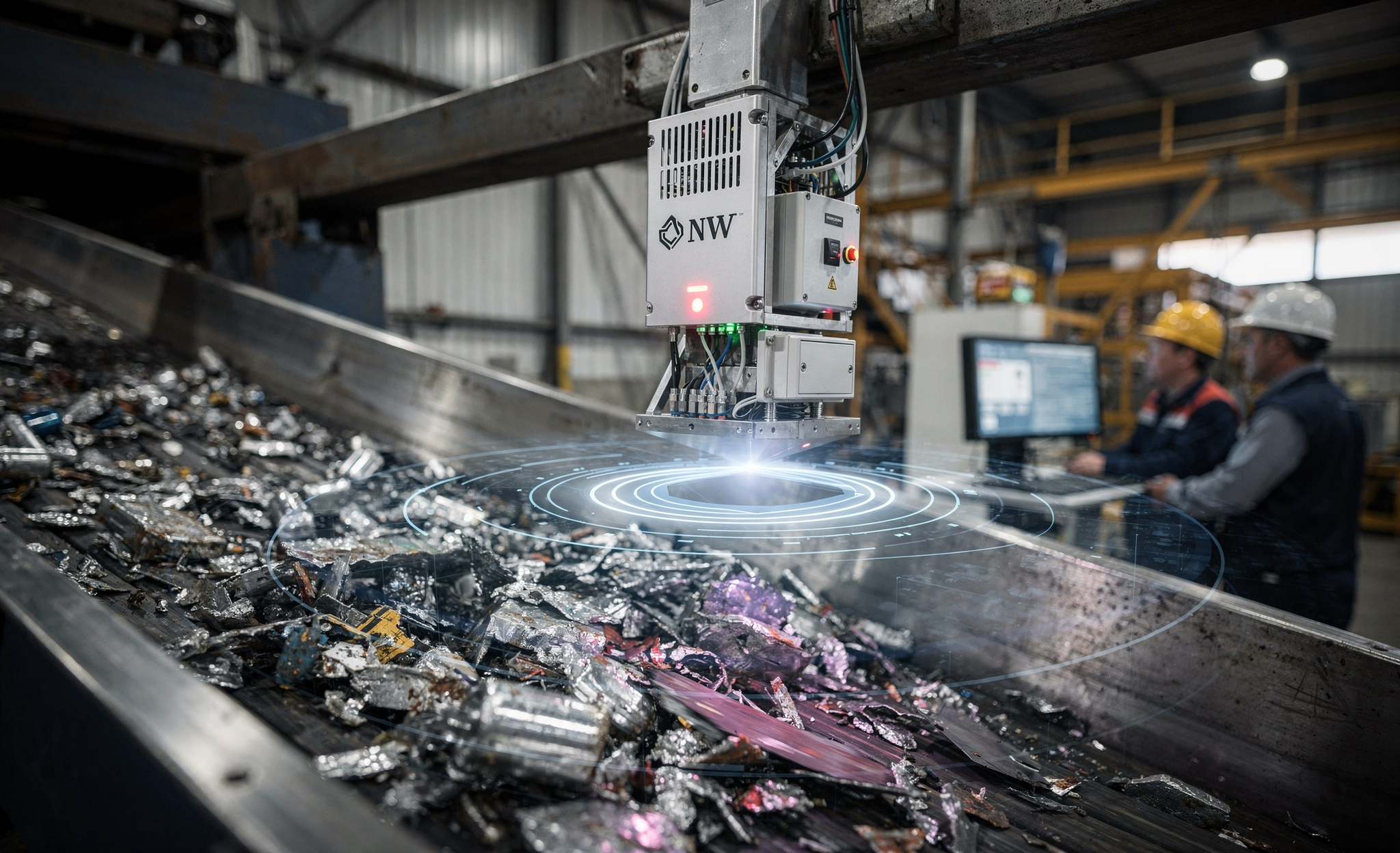
High-precision sorting of recyclable metals in waste streams, be detecting the conductivity and magnetic properties of materials.
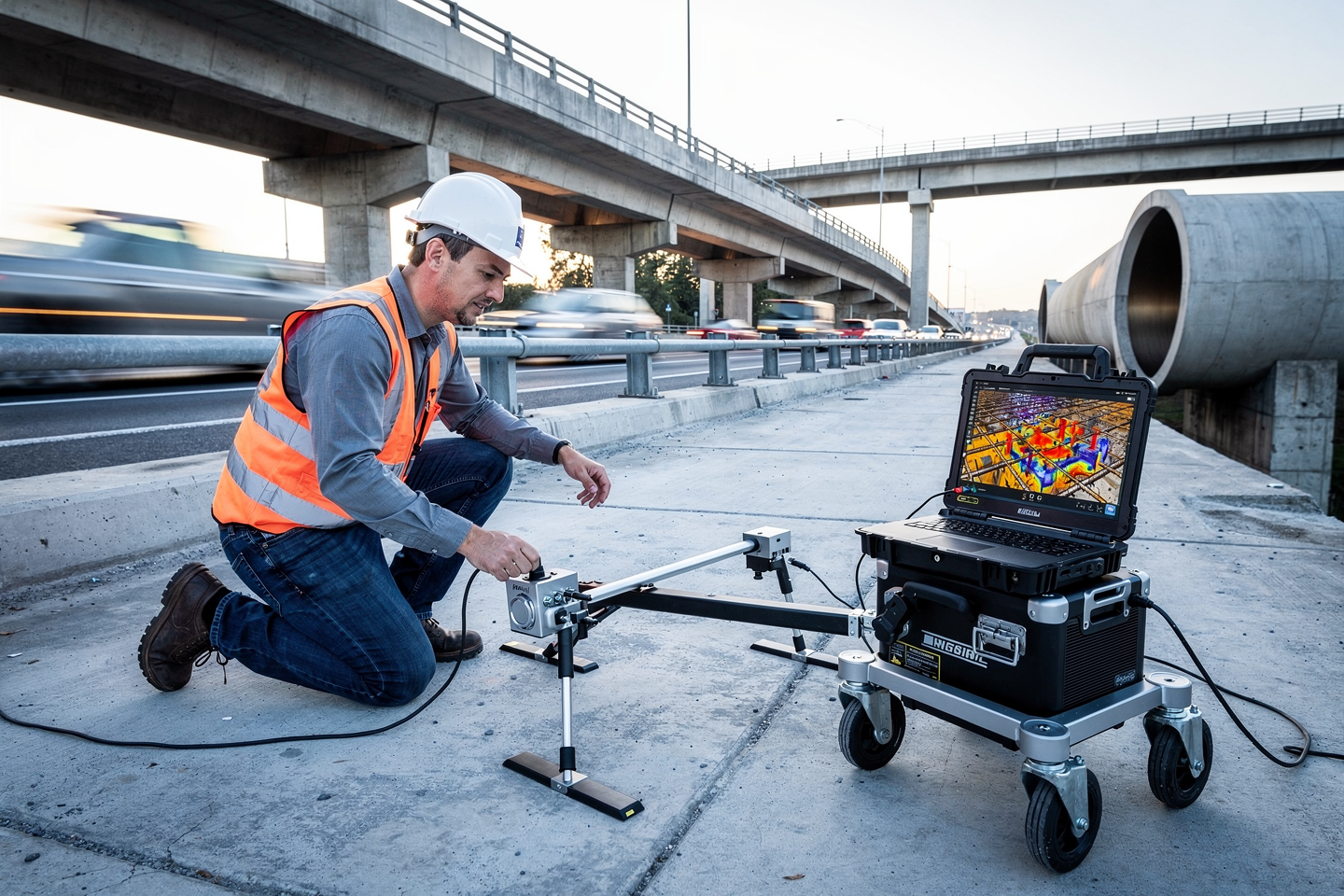
Non-destructive evaluation of rebar corrosion, pipe integrity, and embedded structural steel in concrete, bridges, and critical infrastructure.

The sensor's extreme sensitivity enables applications in Magnetoencephalography (MEG) for brain activity mapping.